
Quick Summary
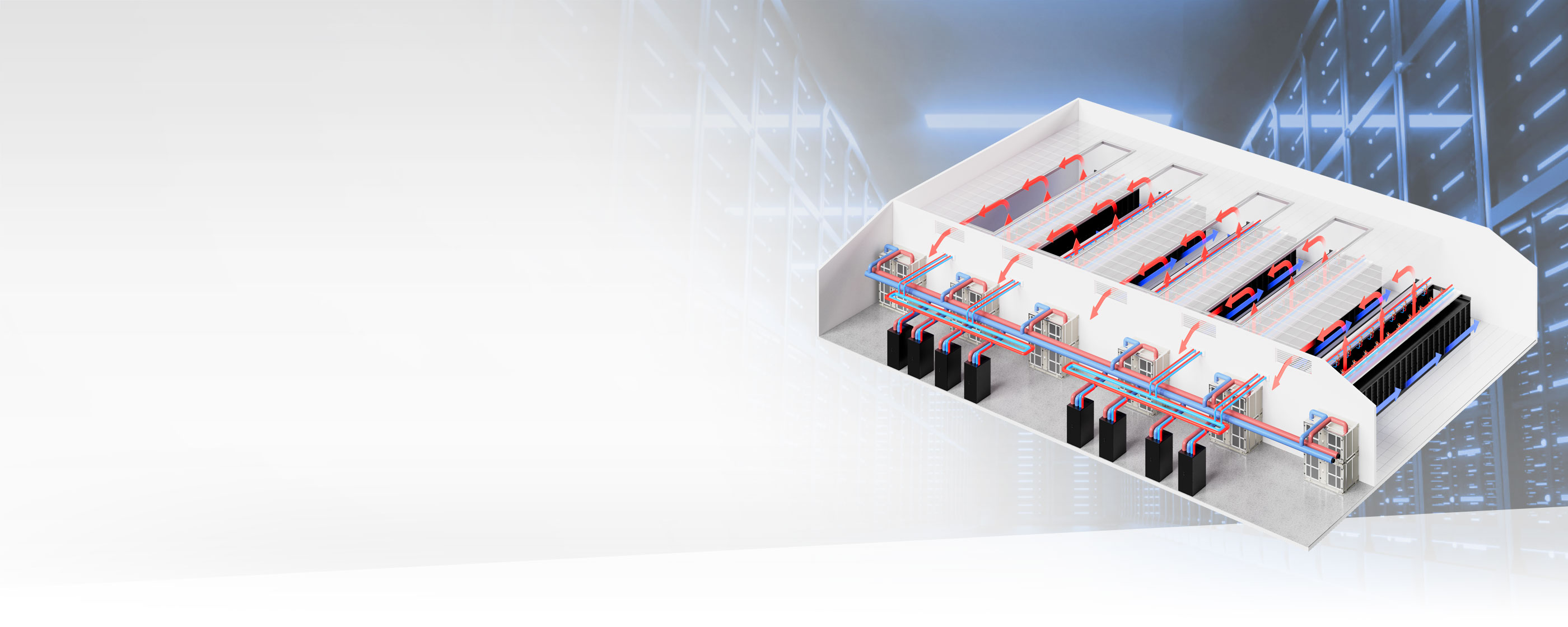
- Hybrid cooling combines traditional air cooling with liquid cooling technologies to support modern high-density data centres.
- Integrates CRAC units, CRAH units and liquid cooling systems such as direct-to-chip cooling and rear-door heat exchangers.
- Enables liquid cooling for high-density racks while maintaining air cooling for the rest of the data hall.
- Helps data centres support AI, HPC and cloud workloads without requiring a complete infrastructure replacement.
- Improves efficiency by removing heat closer to the source, reducing the workload on air cooling systems.
- Intelligent controls automatically balance airflow, cooling capacity and liquid flow to optimise performance.
- Provides a practical pathway for both retrofitting existing facilities and designing new high-density data centres.
- Reduces energy consumption, lowers PUE and supports long-term scalability and sustainability goals.
Traditional air-based systems alone are under pressure as rack densities soar with AI, cloud and HPC workloads. Hybrid cooling systems are the next generation in data centre efficiency, combining CRAC and CRAH technologies with liquid cooling. They offer the mix of performance and efficiency that modern data centres rely on.
What Is a Hybrid Cooling System?
A hybrid cooling system blends air and liquid cooling to manage rising thermal loads efficiently. It integrates familiar Computer Room Air Conditioners (CRAC units) and Computer Room Air Handlers (CRAH units) with advanced liquid-based technologies. This enables tailored solutions for both legacy systems and new environments.
Combining Air and Liquid Cooling
In a traditional setup, CRAC units use direct expansion (DX) systems with refrigerant-based cooling. In contrast, CRAH units rely on chilled water supplied by a central chiller.
Hybrid systems combine these methods with direct-to-chip cooling, which circulates liquid directly over processors. They can also include rear-door heat exchangers, which capture heat as it leaves the rack. This design uses liquid cooling for high-density servers, while air systems cool the rest of the data hall.
This approach merges the precision of CRAH systems with the simplicity of CRAC, optimising energy use across mixed workloads.
Quick comparison:
- CRAC vs CRAH: CRAC units use DX refrigerant; CRAH units use chilled water.
- CRAC unit vs CRAH unit: CRACs are self-contained; CRAHs rely on a chiller plant.
- CRAH vs CRAC unit: CRAHs often achieve higher energy efficiency at scale.
Why Hybrid Cooling Is Gaining Momentum
AI and cloud computing workloads have increased rack densities beyond 50 kW. Conventional CRAC or CRAH systems struggle to dissipate that heat efficiently. Hybrid cooling provides a bridge between air and liquid, allowing operators to adopt liquid cooling gradually.
This prevents the need for a full infrastructure overhaul. It also offers flexibility for phased upgrades, aligning with cost-efficiency goals.
How Hybrid Cooling Works
Understanding how hybrid cooling operates helps explain why it’s becoming the preferred choice for next-generation data centres.
Direct-to-Chip Meets Air-Cooled Infrastructure
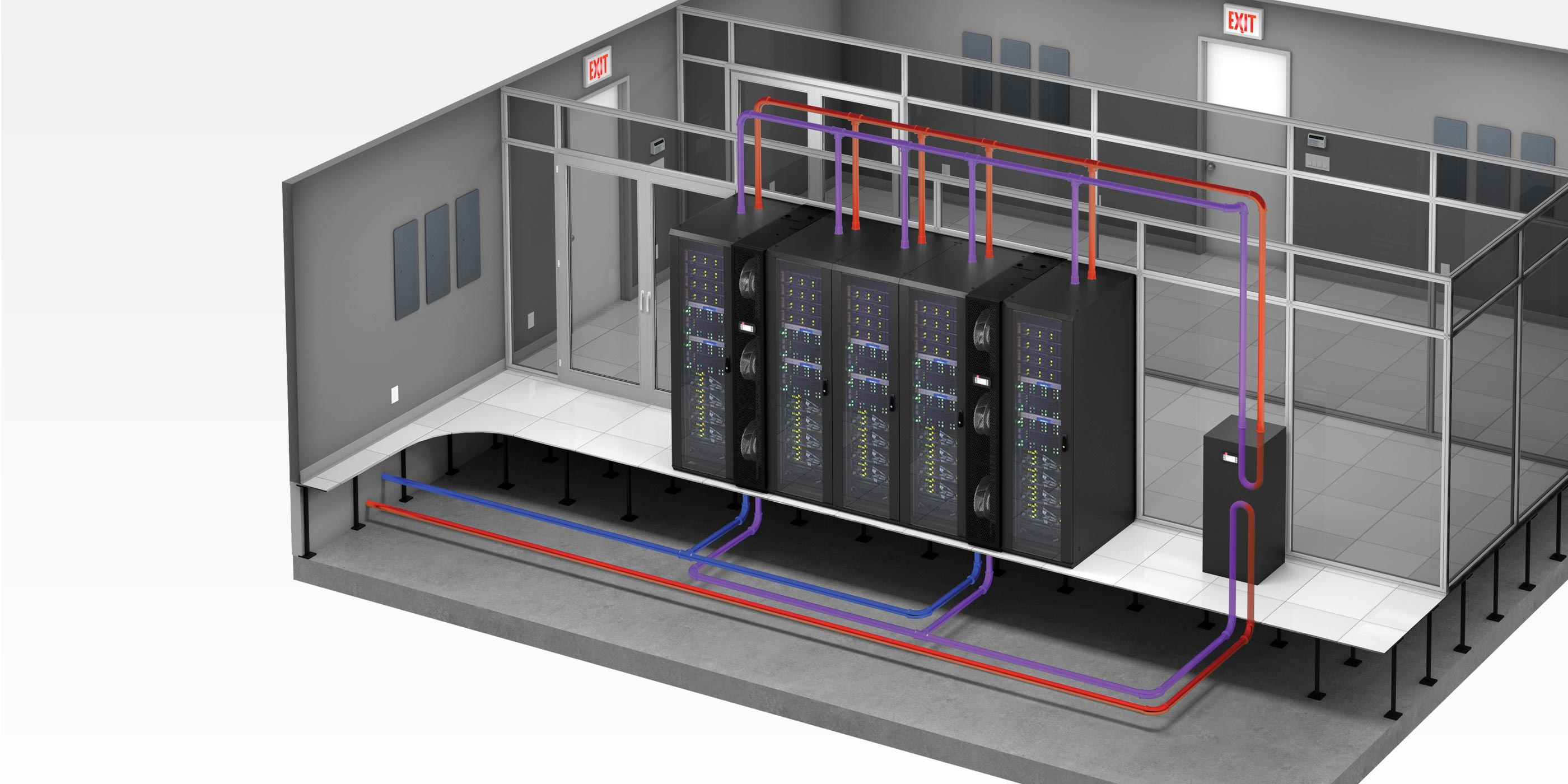
In hybrid configurations, liquid cooling removes heat directly from processors and transfers it to a secondary loop. This reduces the thermal burden on CRAC or CRAH systems. The result is higher overall efficiency, reduced compressor runtime and improved component lifespan.
Facilities can continue using precision air cooling while introducing liquid loops for high-density racks. This is a cost-effective path toward next-generation thermal management.
Balancing Loads with Smart Control Systems
Intelligent controls constantly monitor rack temperatures, airflow and water flow rates. These systems automatically adjust the balance between liquid and air cooling depending on demand. The outcome is consistent temperature stability and optimised power consumption, even as workloads fluctuate.
Key Benefits for Modern Data Centres
Modern data centres require solutions that improve efficiency without compromising reliability. Hybrid cooling delivers this balance through adaptable, high-performance design.
Efficiency, Flexibility and Scalability
- Improved efficiency: Liquid cooling can remove 70–80% of server heat at source.
- Flexible integration: Support both liquid-cooled and air-cooled racks in one system.
- Scalable design: Modular components make upgrades simple and non-disruptive.
Lower Operating Costs
Hybrid systems help reduce energy use, emissions and operating costs. They lower PUE (Power Usage Effectiveness) by cutting compressor reliance and optimising airflow. When paired with free cooling, efficiency rises further.
When to Choose a Hybrid Cooling Solution
Choosing the right cooling approach depends on your facility’s design, density, and long-term strategy. Hybrid systems are ideal for operators looking to enhance performance without replacing existing infrastructure. They offer a flexible pathway for both retrofit and new data centre builds.
Retrofitting vs New Builds
- Retrofitting existing sites: Hybrid systems extend the life of legacy CRAC and CRAH units while preparing for AI workloads.
- New builds: Designing hybrid from the ground up ensures maximum performance and sustainability compliance.
This approach enables operators to adapt to new requirements without compromising uptime or capacity.
STULZ Hybrid Cooling Expertise
STULZ has over 75 years in precision climate control. We deliver hybrid systems that integrate air, chilled water and liquid cooling for data centres of all sizes.
Ready to improve your cooling strategy? Contact STULZ to explore hybrid solutions for your facility.
FAQs
- What is a hybrid cooling system in a data centre?
A hybrid cooling system combines traditional air cooling technologies, such as CRAC and CRAH units, with liquid cooling solutions to efficiently manage a range of rack densities and workloads. - Why are hybrid cooling systems becoming more popular?
As AI, cloud and HPC workloads increase rack power densities, hybrid cooling provides a flexible way to manage higher heat loads without replacing an entire cooling infrastructure. - How does hybrid cooling improve efficiency?
Liquid cooling removes heat directly from high-performance components, reducing the burden on air cooling systems and lowering overall energy consumption. - Can hybrid cooling be added to an existing data centre?
Yes. Hybrid cooling is commonly used in retrofit projects because it allows operators to introduce liquid cooling gradually while continuing to use existing CRAC and CRAH infrastructure. - What workloads benefit most from hybrid cooling?
AI training clusters, GPU-dense environments, HPC workloads and high-density cloud infrastructure typically benefit the most from hybrid cooling solutions. - What are the benefits of hybrid cooling compared to air cooling alone?
Hybrid cooling improves cooling efficiency, supports higher rack densities, reduces operating costs, lowers PUE and provides greater flexibility for future expansion and technology upgrades.