
Quick Summary
- Direct-to-chip cooling uses liquid-filled cold plates to remove heat straight from CPUs and GPUs.
- A coolant distribution unit (CDU) separates the server cooling loop from the facility water loop.
- Systems run as single-phase (treated water or water-glycol) or two-phase (boiling dielectric fluid).
- Around 20 to 30% of server heat can still need air cooling, handled by rear door heat exchangers or in-row units.
- Before deploying, check coolant quality, pump and CDU redundancy, facility water temperatures and pipework.
As processors become more powerful and server racks generate more heat, traditional air cooling is struggling to keep up with some workloads. Direct-to-chip cooling offers an alternative by removing heat directly from the components that generate it.
How does direct-to-chip cooling work, and what infrastructure supports it?
Direct-to-Chip Cooling Defined: Liquid at the Heat Source
Direct-to-chip cooling uses liquid-filled cold plates to cool components such as CPUs and GPUs. The liquid absorbs heat from these components and carries it away. This method is also commonly called direct liquid cooling.
Chip Power Rising Past What Heat Sinks and Fans Can Shed
AI and high-performance computing are increasing processor power and heat output. As rack densities rise, conventional heat sinks and fans may struggle to remove sufficient heat efficiently.
Where Direct-to-Chip Sits Among Liquid Cooling Methods
Unlike immersion cooling, which submerges server components in dielectric fluid, direct-to-chip cooling targets individual components. It can also operate alongside existing air cooling infrastructure.
Inside the Cooling Loop: From Cold Plate to Heat Rejection
Several components work together to transfer heat from the processors to the facility's cooling system.
Cold Plates and Microchannels on CPUs and GPUs
Cold plates sit directly against processors, using internal channels to circulate coolant and absorb heat. Microchannel designs increase the surface area available for heat transfer.
Manifolds, Hoses and Quick-Disconnect Couplings
Manifolds distribute coolant between servers, while hoses connect the components. Quick-disconnect couplings allow equipment servicing with minimal coolant loss.
The CDU Separating the Facility and Technology Loops
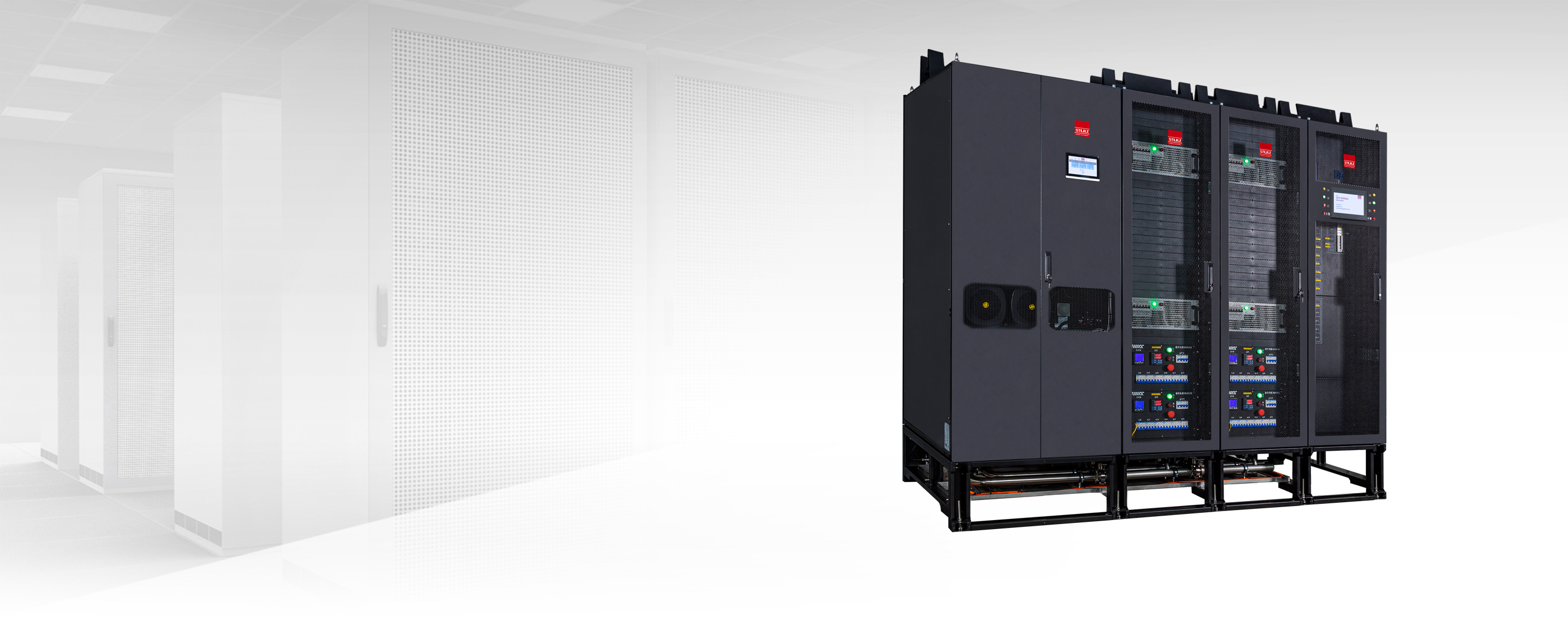
STULZ's CyberCool CDU range offers cooling capacities from 345 to 1,380 kW. It separates the facility and technology cooling loops and offers optional redundant pumps and controllers to support reliable operation.
Rejecting Heat Through Dry Coolers or Chilled Water
The CDU transfers heat from the servers to the facility's cooling system. Dry coolers, chillers or other equipment then remove the heat from the building.
Single-Phase vs Two-Phase Direct-to-Chip Cooling
Direct-to-chip cooling systems use either single-phase or two-phase cooling.
Single-Phase Loops Using Treated Water or Water-Glycol
In single-phase systems, coolant remains liquid throughout the circuit. Treated water or water-glycol mixtures absorb heat as their temperature rises before returning to the CDU.
Two-Phase Loops Using Boiling Dielectric Fluid
Two-phase systems use a dielectric fluid that boils as it absorbs heat. The vapour then condenses back into liquid, releasing heat in the process. These systems require different fluid management and operating controls.
The Heat Direct-to-Chip Leaves Behind
Direct-to-chip cooling does not necessarily eliminate the need for air cooling.
Why Some Server Heat Still Needs Air Cooling
Direct-to-chip cooling removes heat from the main processors, but other components still generate heat. Memory, power supplies and other electronics release heat into the surrounding air. Depending on the server design and cold plate coverage, air cooling may still need to manage around 20 to 30% of the total heat load.
Rear Door Heat Exchangers and In-Row Units for the Remainder
Rear door heat exchangers and in-row cooling units work alongside direct-to-chip cooling to remove this remaining heat. Rear door heat exchangers capture heat as air leaves the server racks, while in-row units cool the air circulating between racks. These systems manage the heat that the liquid cooling system doesn't remove.
For example, the STULZ Integrated Liquid Cooling System supports up to 100 kW per rack, with approximately 80% liquid cooling and 20% air cooling through active rear doors.
Advantages of Cooling at the Chip
More Compute per Rack Without Expanding the Data Hall
By removing heat directly from processors, direct-to-chip cooling can support higher rack densities without a corresponding increase in floor space. This means operators can install more computing power in the same space, provided the supporting infrastructure can handle it.
Warm-Water Operation and More Free Cooling Opportunities
Higher coolant temperatures can reduce the need for mechanical refrigeration and increase opportunities for free cooling. This allows facilities to use outdoor air temperatures to help reject heat, potentially reducing energy costs. The benefits depend on local climate and system design.
Less Fan Energy and Quieter White Space
Removing more heat through liquid can reduce the need for server fans to operate at high speeds. This can lower energy consumption and noise levels within the data hall, creating a quieter environment for maintenance staff.
What to Check Before Deploying Direct-to-Chip
Keeping the Technology Loop Clean: Filtration, pH and Conductivity
Coolant quality is essential for reliable operation. Filtration, pH and conductivity monitoring help protect cold plates and other components from contamination and corrosion.
STULZ's Integrated Liquid Cooling System includes a 50 μm filter, with a 25 μm option, as well as pH, conductivity and leak monitoring.
Pump and CDU Redundancy
Consider how cooling will continue during pump failures or maintenance. Redundant pumps, controllers and CDU capacity can help reduce single points of failure.
Facility Water Temperatures and Pipework in an Existing Hall
Existing data centres need to assess available water temperatures, pipework capacity, space, leak detection and integration with current cooling infrastructure.
Direct-to-Chip vs Immersion Cooling: Matching the Method to the Workload
Direct-to-chip cooling targets high-heat components while retaining much of the conventional server arrangement. Immersion cooling places equipment in dielectric fluid and may require different server configurations and maintenance procedures.
The best option depends on the servers being used, the available cooling infrastructure and maintenance requirements.
Read more about how data centre immersion cooling works.
Planning Your Move to Direct-to-Chip Cooling
Before introducing direct-to-chip cooling, data centre operators need to assess their existing cooling infrastructure, available water temperatures, pipework, redundancy and maintenance requirements.
STULZ Oceania offers liquid cooling solutions that combine liquid and air cooling to support higher-density data centres. Our team can help assess cooling requirements and identify suitable options for new installations and existing facilities.
Explore our liquid cooling products or contact STULZ Oceania to discuss your next project.
FAQs
What is direct-to-chip cooling?
Direct-to-chip cooling is a liquid cooling method that places cold plates directly on high-heat components such as CPUs and GPUs. Coolant flows through the cold plates, absorbs heat at the source and carries it to a coolant distribution unit (CDU) for transfer to the facility's cooling system.
Does direct-to-chip cooling replace air cooling?
Not entirely. Cold plates remove heat from the main processors, but memory, power supplies and other electronics still release heat into the air. Depending on the server design, around 20 to 30% of the heat load may still need air cooling, often handled by rear door heat exchangers or in-row units.
What does a CDU do in a direct-to-chip system?
A coolant distribution unit separates the technology cooling loop that runs through the servers from the facility water loop. It transfers heat between the two loops and controls coolant flow, with redundant pumps and controllers available to support reliable operation.
What is the difference between single-phase and two-phase direct-to-chip cooling?
In single-phase systems, treated water or a water-glycol mixture stays liquid throughout the loop. In two-phase systems, a dielectric fluid boils as it absorbs heat and then condenses back into liquid, which requires different fluid management and controls.
Can direct-to-chip cooling be added to an existing data centre?
Yes, in many cases. Direct-to-chip cooling can operate alongside existing air cooling, but the site needs to be assessed first for available water temperatures, pipework capacity, space, leak detection and how the new system will integrate with current cooling infrastructure.