
Data centre evaporative cooling is emerging as a proven way to reduce energy consumption and environmental impact. By utilising the natural cooling power of water evaporation, this method offers a climate-smart alternative to compressor-driven refrigeration, without compromising reliability.
What Is Evaporative Cooling in a Data Centre?
Quick Summary
- Uses the natural process of water evaporation to cool air and remove heat from data centre environments.
- Consumes significantly less energy than traditional compressor-based cooling systems.
- Available as direct evaporative cooling (DEC) or indirect evaporative cooling (IEC) depending on humidity and operational requirements.
- Helps reduce operating costs, improve PUE and lower reliance on synthetic refrigerants.
- Most effective in dry and moderate climates, with hybrid and adiabatic systems available for more challenging conditions.
- Supports sustainability and net-zero objectives by reducing energy consumption and associated emissions.
- Requires careful water management, treatment and monitoring to maintain efficiency and reliability.
- Can be integrated into modern cooling strategies alongside free cooling and liquid cooling technologies.
Evaporative cooling uses water’s natural ability to absorb heat as it turns into vapour. This process cools the surrounding air. Data centres use this process to keep IT equipment at the right temperature. It also consumes far less energy than conventional cooling systems.
How the Cooling Process Works
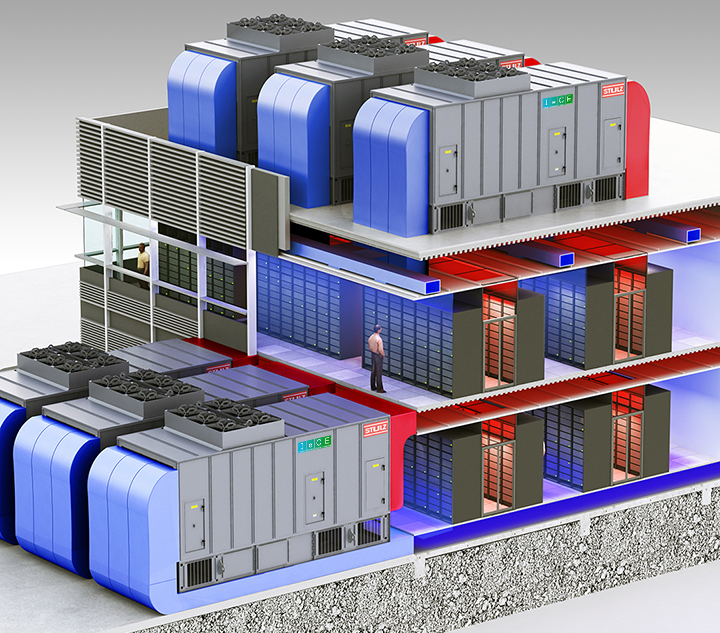
Warm outside air cools as it passes through damp filters or fine water spray. The system then directs this cooler air into the data hall or uses it to pre-cool return air.
- Heat transfer: As water evaporates, it absorbs heat from the air, lowering the air temperature.
- Airflow management: Fans and ducts distribute cooled air across spaces.
- Humidity control: Sensors and control systems ensure consistent humidity levels.
Direct vs Indirect Systems
- Direct evaporative cooling (DEC): Introduces cooled, humidified air directly into the data hall.
- Indirect evaporative cooling (IEC): Uses a heat exchanger to cool the internal air stream without adding moisture. This is ideal for sensitive IT environments or high-humidity regions.
Why Data Centres Are Turning to Evaporative Cooling
With growing pressure to improve efficiency and lower emissions, more data centres are adopting evaporative cooling as a smarter, greener alternative to traditional systems.
Lower Energy Consumption and Operating Costs
Evaporative systems use only a fraction of the energy required by compressor-based chillers. This reduces Power Usage Effectiveness (PUE) and cuts operating costs.
Reduced Reliance on Refrigerants
Traditional systems depend on synthetic refrigerants with high global warming potential. Evaporative cooling relies on water and air, helping operators reduce their Scope 1 and 2 emissions.
Alignment with Environmental Targets
Many data centre operators are using evaporative or hybrid cooling to cut emissions and support their net-zero commitments. This approach supports corporate environmental goals by lowering energy use, reducing emissions and saving on lifecycle costs.
Advantages and Limitations
Evaporative cooling offers strong efficiency benefits, but it also has some limitations. Knowing both sides helps select the right design.
Key Efficiency and Performance Benefits
- Up to 80% energy savings compared to traditional mechanical cooling.
- Compatible with free cooling modes during cooler months.
- Scalable for modular and edge data centres.
- Lower noise and maintenance requirements.
Water Usage and Maintenance Considerations
The trade-off for energy savings is water consumption. Regular monitoring and water treatment are essential to manage scale, corrosion and hygiene. Automated controls adjust water cycles to maintain the right concentration of minerals and reduce waste.
Climate and Humidity Constraints
Evaporative cooling performs best in dry, moderate climates. In humid or coastal areas, efficiency drops, and hybrid or adiabatic systems (see below) may be more practical.
When Evaporative Cooling Makes the Most Sense
Evaporative cooling performs best under certain conditions. Knowing when and where to apply it ensures maximum efficiency and reliability, especially when paired with other cooling technologies.
Ideal Climates and Applications
- Evaporative cooling works best in dry, moderate climates like inland Australia. The low humidity allows for effective heat removal and consistent cooling performance.
- Facilities with high rack densities and flexible airflow configurations.
- Sites where water availability is reliable and local regulations support reuse or recycling.
Hybrid and Adiabatic Alternatives
For challenging climates, adiabatic cooling combines evaporative pre-cooling with conventional refrigeration to achieve balanced efficiency and reliability. Hybrid systems automatically switch between modes to maintain optimal performance year-round.
How STULZ Delivers Reliable Evaporative Cooling Solutions
Precision Engineering and System Integration
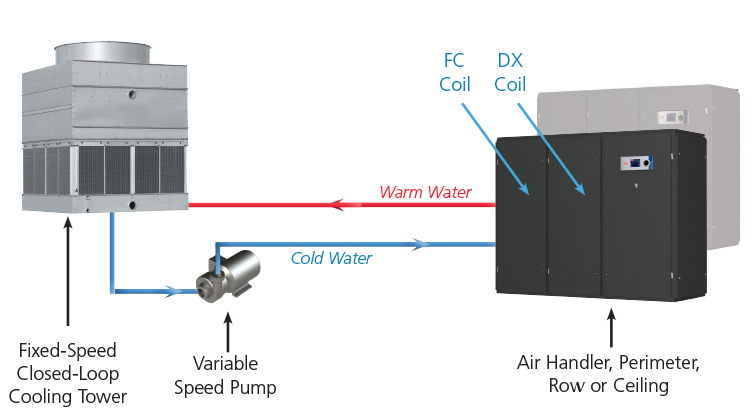
STULZ designs and integrates advanced precision cooling and air handling units tailored for high-density environments. STULZ engineers each system for maximum efficiency, uptime and control.
Intelligent Controls and Monitoring
Smart control systems consistently regulate fan speed, humidity and water flow to achieve target conditions with minimal energy use. Real-time monitoring ensures predictive maintenance and compliance with performance benchmarks.
Lifecycle Support and Service
STULZ provides complete lifecycle management from initial design through to commissioning, maintenance, and retrofit support. This ensures consistent performance and long-term reliability across all cooling technologies.
Balancing Energy and Water Efficiency
Understanding PUE and WUE
PUE, or Power Usage Effectiveness, has long been the main way to measure data centre energy efficiency. Today, WUE - Water Usage Effectiveness - is becoming just as important. Effective evaporative cooling achieves an optimal balance between the two, delivering lower total environmental impact.
Designing for Long-Term Efficiency
The future of data centre cooling lies in systems that integrate free cooling, evaporative cooling and liquid cooling. STULZ engineers can tailor hybrid cooling systems to suit local climates, specific facility demands and long-term efficiency objectives
As demand for digital infrastructure grows, so does the need for climate-responsible thermal management. Evaporative cooling for data centres offers an effective pathway toward net-zero goals, by reducing energy use, emissions and operating costs without compromising uptime.
With decades of expertise in precision climate control, STULZ helps operators design, implement and maintain reliable, efficient cooling systems. All built for the data centres of tomorrow. Enquire with Stulz today on 1300 138 818 or contact us via our website.
FAQs
-
What is evaporative cooling in a data centre?
Evaporative cooling is a cooling method that uses water evaporation to lower air temperatures. As water evaporates, it absorbs heat from the surrounding air, providing an energy-efficient way to cool data centre environments. -
What is the difference between direct and indirect evaporative cooling?
Direct evaporative cooling introduces cooled, humidified air directly into the data hall. Indirect evaporative cooling uses a heat exchanger to cool the internal air stream without adding moisture, making it suitable for sensitive IT equipment and humid climates. -
How much energy can evaporative cooling save?
Depending on the climate and system design, evaporative cooling can reduce cooling energy consumption by up to 80% compared to traditional mechanical refrigeration systems. -
Does evaporative cooling use a lot of water?
Evaporative cooling does require water to operate, but modern systems use advanced controls, water treatment and monitoring to optimise consumption and minimise waste while maintaining efficiency. -
Is evaporative cooling suitable for all data centres?
Not always. Evaporative cooling performs best in dry or moderate climates. In humid regions, hybrid or adiabatic cooling systems are often used to achieve the best balance of efficiency, reliability and environmental performance. -
How does evaporative cooling improve sustainability?
Evaporative cooling reduces electricity consumption, lowers greenhouse gas emissions and decreases reliance on synthetic refrigerants. When designed correctly, it can help data centres improve both Power Usage Effectiveness (PUE) and overall environmental performance.